
Human_ZNF195
-
ProteinZinc finger protein 195
-
Length629
-
OrganismHomo sapiens (Human)
-
Time of emergence43.0 Mya
-
Time of Changing in binding specificity28.9 Mya
-
Uniprot_ID
-
NCBI_ID
Sequence:
MTLLTFRDVAIEFSLEEWKCLDLAQQNLYRDVMLENYRNLFSVGLTVCKPGLITCLEQRKEPWNVKRQEAADGHPEMGFHHATQACLELLGSSDLPASASQSAGITGVNHRAQPGLNVSVDKFTALCSPGVLQTVKWFLEFRCIFSLAMSSHFTQDLLPEQGIQDAFPKRILRGYGNCGLDNLYLRKDWESLDECKLQKDYNGLNQCSSTTHSKIFQYNKYVKIFDNFSNLHRRNISNTGEKPFKCQECGKSFQMLSFLTEHQKIHTGKKFQKCGECGKTFIQCSHFTEPENIDTGEKPYKCQECNNVIKTCSVLTKNRIYAGGEHYRCEEFGKVFNQCSHLTEHEHGTEEKPCKYEECSSVFISCSSLSNQQMILAGEKLSKCETWYKGFNHSPNPSKHQRNEIGGKPFKCEECDSIFKWFSDLTKHKRIHTGEKPYKCDECGKAYTQSSHLSEHRRIHTGEKPYQCEECGKVFRTCSSLSNHKRTHSEEKPYTCEECGNIFKQLSDLTKHKKTHTGEKPYKCDECGKNFTQSSNLIVHKRIHTGEKPYKCEECGRVFMWFSDITKHKKTHTGEKPYKCDECGKNFTQSSNLIVHKRIHTGEKPYKCEKCGKAFTQFSHLTVHESIHT
Domain
:

| # | Domain name | Pos | |
|---|---|---|---|
| 1 | KRAB | 4..75 | |
| 2 | C2h2 | 244..266 | |
| 3 | dec2h2 | 272..294 | |
| 4 | C2h2 | 410..432 | |
| 5 | C2h2 | 438..460 | |
| 6 | C2h2 | 466..488 | |
| 7 | C2h2 | 494..516 | |
| 8 | C2h2 | 522..544 | |
| 9 | C2h2 | 550..572 | |
| 10 | C2h2 | 578..600 | |
| 11 | C2h2 | 606..628 |
Gene Ontology Annotation
:
| # | Type | TERM | |
|---|---|---|---|
| 1 | Cellular Component | nucleus | |
| 2 | Molecular Function | DNA-binding transcription factor activity, RNA polymerase II-specific | |
| 3 | Molecular Function | RNA polymerase II cis-regulatory region sequence-specific DNA binding | |
| 4 | Molecular Function | zinc ion binding | |
| 5 | Biological Process | regulation of DNA-templated transcription |
Is there ChIP-seq data
:
Yes
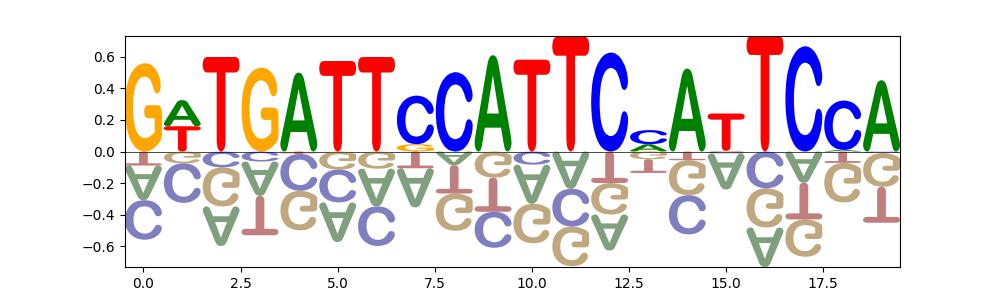
Motif(meme-ChIP)
:
Forward:
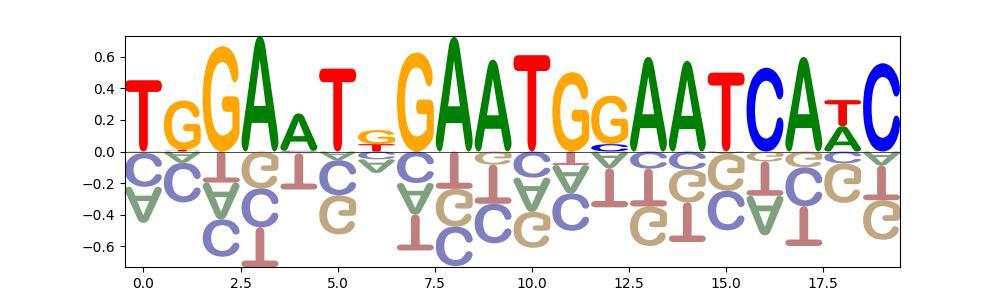
Reverse:
Peak overlapping
:
| # | Repeats name | Record number | Significance | Emergence time(Mya) | Time correlation with KZFP | |
|---|---|---|---|---|---|---|
| 1 | LTR8 | 8 | **** | 43.0 | Moderately correlated | |
| 2 | L1P3 | 7 | **** | 74.0 | Weakly correlated | |
| 3 | AluSc8 | 6 | *** | 74.0 | Weakly correlated | |
| 4 | AluY | 5 | n.s | 74.0 | Weakly correlated | |
| 5 | AluYj4 | 4 | **** | 0.0 | Weakly correlated | |
| 6 | FRAM | 4 | **** | 74.0 | Weakly correlated | |
| 7 | LTR10A | 4 | **** | 28.9 | Highly correlated | |
| 8 | LTR10F | 3 | **** | 28.9 | Highly correlated | |
| 9 | MLT1L | 1 | n.s | 99.0 | Weakly correlated | |
| 10 | AluJb | 1 | n.s | 74.0 | Weakly correlated | |
| 11 | MIRb | 1 | n.s | 99.0 | Weakly correlated | |
| 12 | LTR10B1 | 1 | **** | 28.9 | Highly correlated | |
| 13 | L1PA8A | 1 | n.s | 74.0 | Weakly correlated | |
| 14 | L1PA5 | 1 | n.s | 19.6 | Weakly correlated | |
| 15 | L1P4 | 1 | n.s | 74.0 | Weakly correlated | |
| 16 | L1MC4 | 1 | n.s | 99.0 | Weakly correlated | |
| 17 | L1MB8 | 1 | n.s | 99.0 | Weakly correlated | |
| 18 | L1M3 | 1 | n.s | 99.0 | Weakly correlated | |
| 19 | L1HS | 1 | n.s | 8.6 | Weakly correlated | |
| 20 | HERV17-int | 1 | * | 28.9 | Highly correlated | |
| 21 | AluYm1 | 1 | * | 19.6 | Weakly correlated | |
| 22 | AluYi6 | 1 | *** | 15.2 | Weakly correlated | |
| 23 | AluSp | 1 | n.s | 74.0 | Weakly correlated |
Motif in Repeats
:
| # | Repeats name | Record number | Significance | Emergence time(Mya) | Time correlation with KZFP | |
|---|---|---|---|---|---|---|
| 1 | FRAM | 3 | *** | 74.0 | Weakly correlated | |
| 2 | AluYj4 | 2 | *** | 0.0 | Weakly correlated | |
| 3 | AluY | 1 | n.s | 74.0 | Weakly correlated | |
| 4 | AluSc8 | 1 | n.s | 74.0 | Weakly correlated |
Motif in Repeats Consensus
:
| # | Repeats name | Emergence time(Mya) | Time correlation with KZFP |
|---|